
Paulina Romel is one of the beneficiaries of the competition for funding student and PhD candidates mobility within the HarSval project. She received 19700 PLN funding for the specialized course: AG – 853 Arctic Terrestrial and Marine Climate History, The University Centre in Svalbard, Longyearbyen.
Enjoy reading her report below:
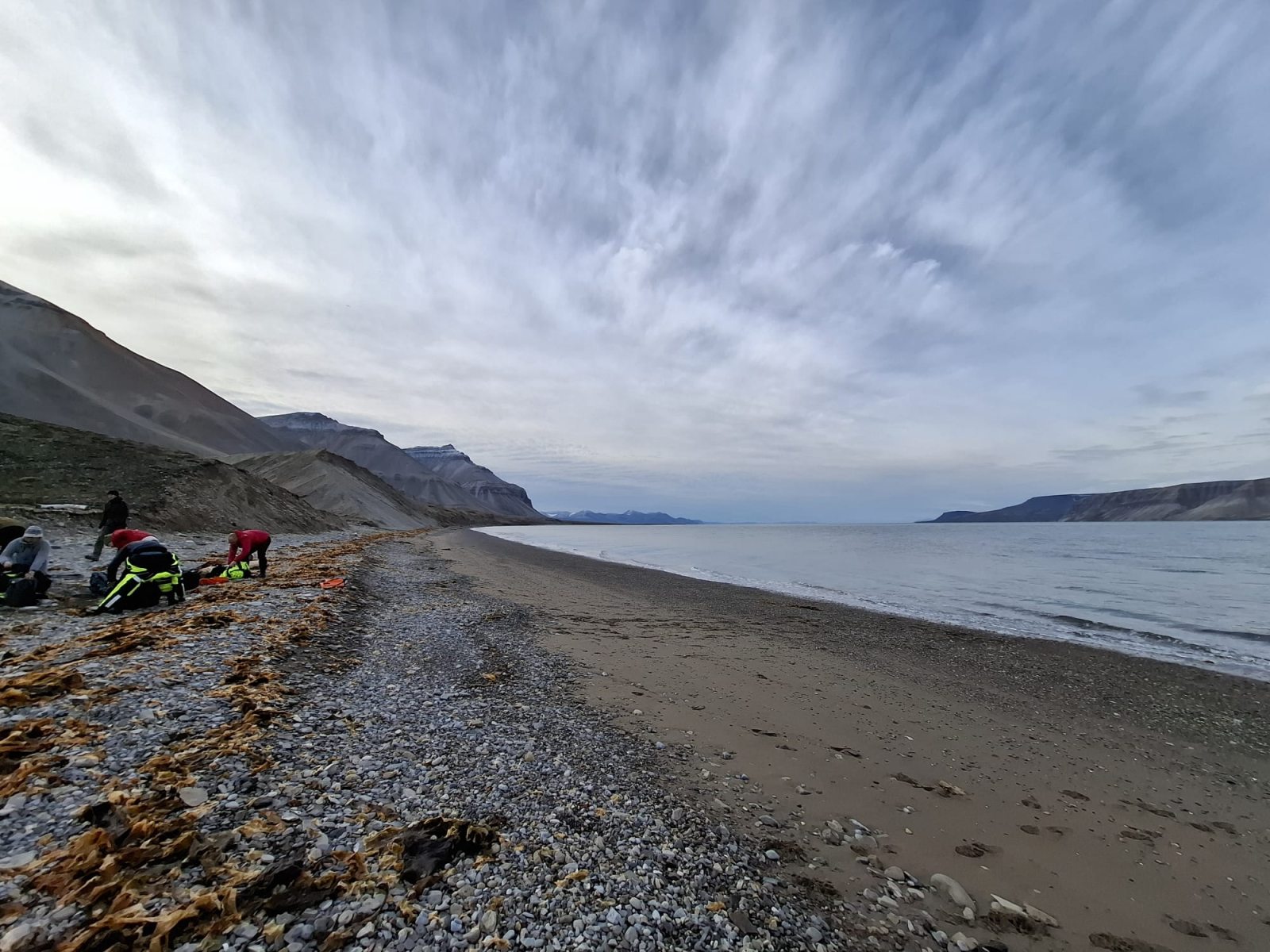
“Thanks to funding from the HarSval competition, from 5.08 to 20.09.2024 I had the pleasure of participating in the course “Arctic terrestrial and marine climate history” organized at the University Centre in Svalbard, and from 21 to 30 September 2024 I studied marine sediment cores from the Arctic Archipelago (Canada) under the supervision of Prof. Mark Furze (UNIS), an expert in the paleogeography of the Canadian Arctic, which is the subject of my doctoral dissertation. The aim of the course was to explore methods of studying past climate and the dynamics of ocean water masses and sea currents based on various geological and biological indicators. Lectures were given by world-class specialists in the field of polar research, who presented the latest research on the Arctic, with particular emphasis on climate change occurring in this part of the world. One of the key elements of the course was the analysis of foraminifera – marine microorganisms that act as important paleoclimatic indicators. Foraminifera are commonly used in studies of past climate, because their calcareous skeletons are preserved in sediments for millions of years, and their chemical composition reflects the environmental conditions in which they lived, and based on this we can obtain information about water temperature, salinity and depth of water masses in the past. The course also included an introduction to geochemical methods, such as analysis of total organic carbon (TOC) and studies of biomarkers of sea ice – the so-called highly branched isoprenoids (HBI). TOC allows to determine the content of organic matter in sediments, which is an important indicator of biological productivity and oxygen conditions in waters, while HBI biomarkers are chemical compounds produced by algae living in sea ice and allow reconstruction of changes in the ice cover in the past. One of the most interesting elements of the course was a 6-day research cruise to the northern coast of Svalbard. During the cruise I had the opportunity to participate in collecting sediment cores – both gravity and box cores – which are crucial for paleoclimate studies. On the ship, we also conducted a preliminary analysis of foraminifera from the sediments of the box cores and identified the species communities that occur today.
During my participation in laboratory core tests with Prof. Marek Furze as part of a project on the deglaciation of the Arctic Archipelago, I focused on describing and sampling the core for further analysis, including total organic carbon (TOC) and biogenic silica content.
This trip was a valuable experience for me, which not only broadened my knowledge of research methods, but also gave me the opportunity to work with real research material in the extreme but beautiful environment of the Arctic. I am convinced that the knowledge and skills I have acquired will be crucial for my further research work in the field of paleoceanography.”