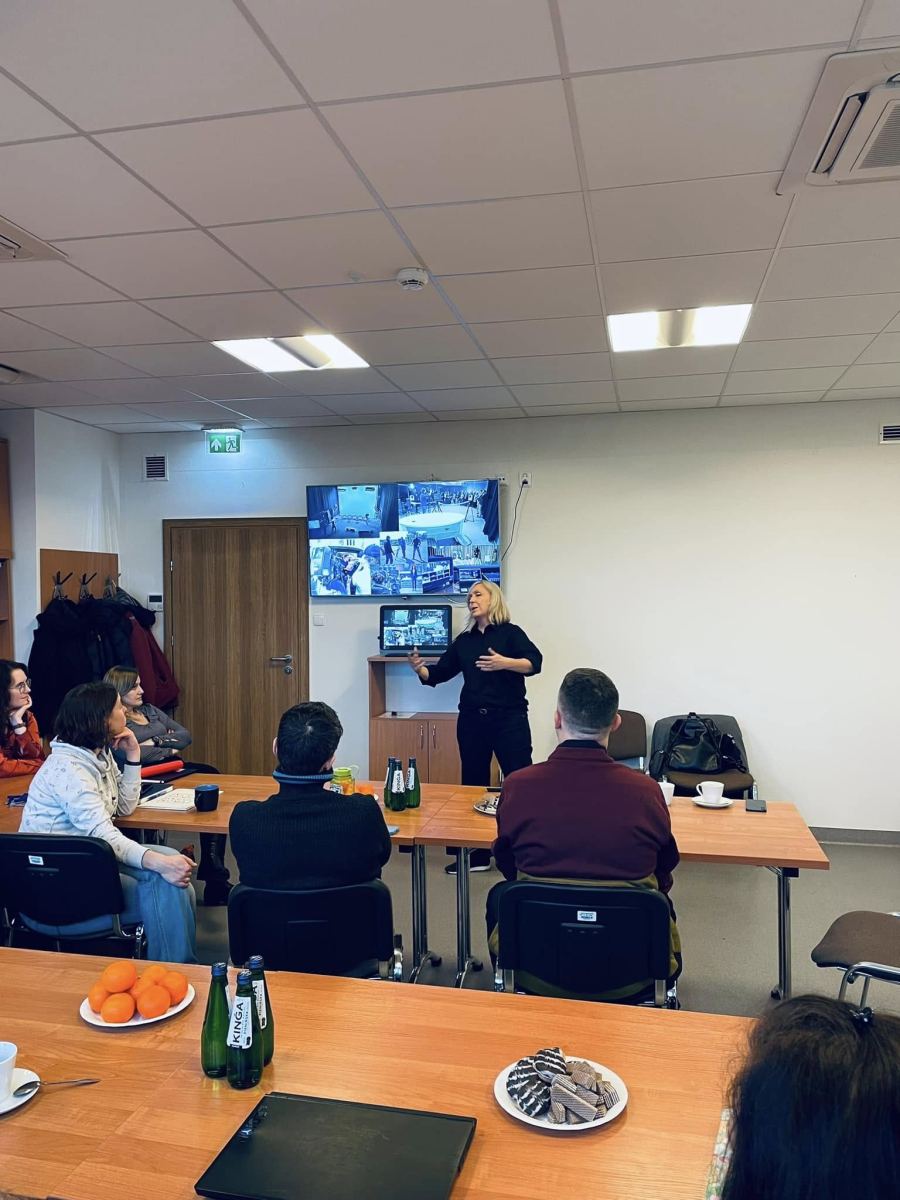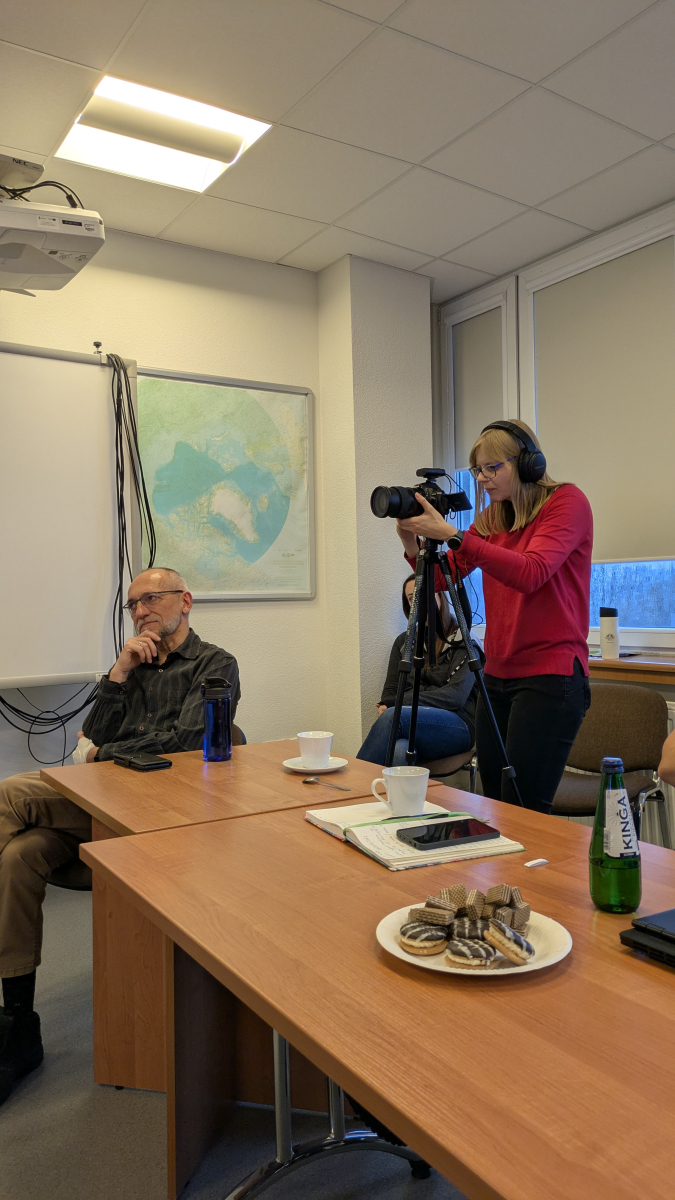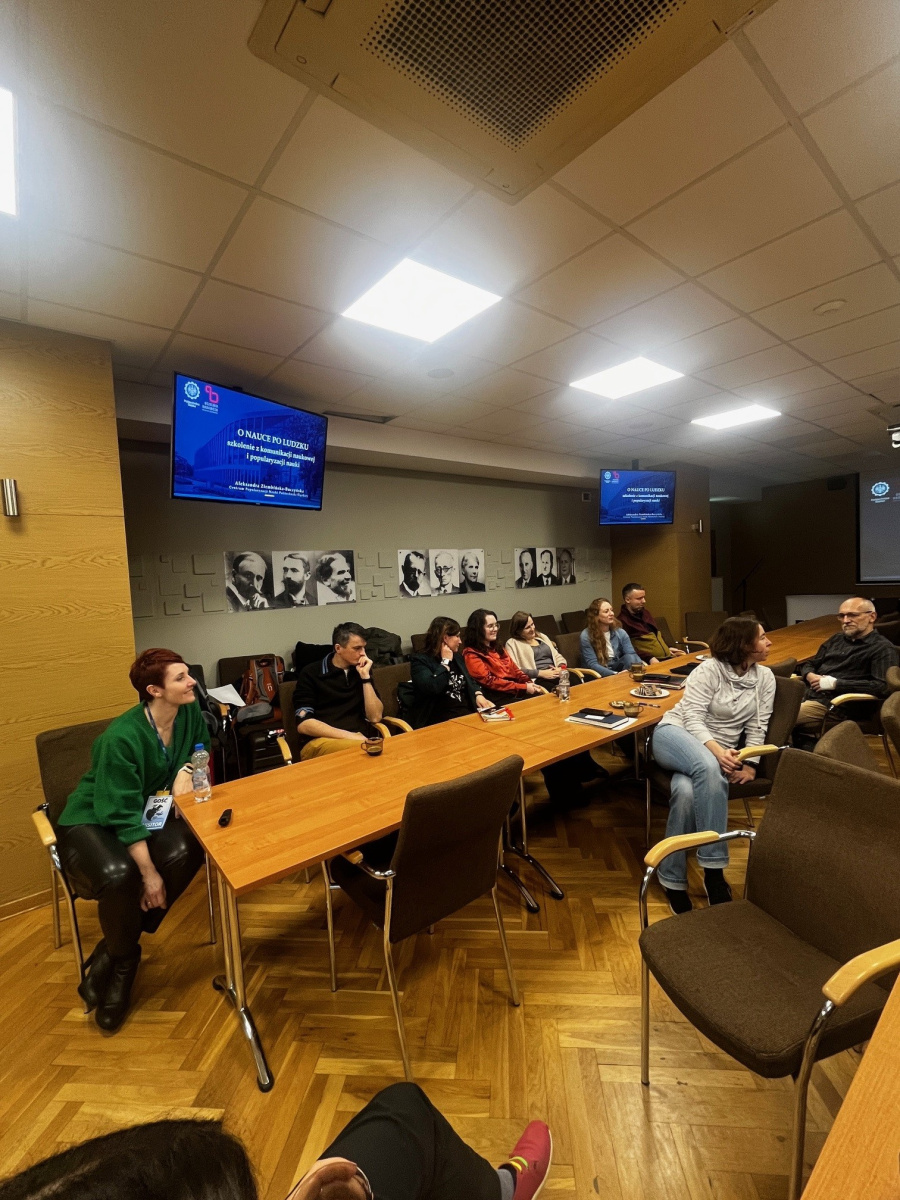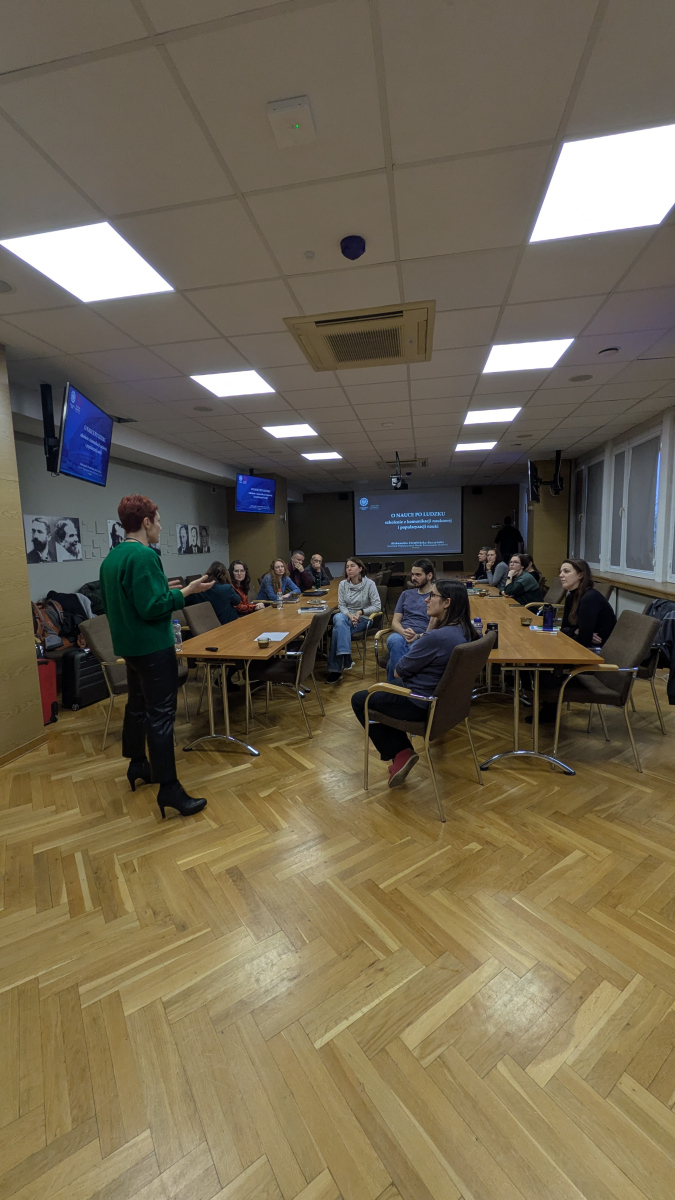

On 16-17 December 2024, a unique educational event in the field of science communication and media cooperation was held for scientists, students and doctoral students. The event was attended by 17 participants representing 5 partner institutions of the HarSval project: the University of Silesia (USil), the University of Wroclaw (UWr), the Institute of Oceanology of the Polish Academy of Sciences (IO PAN), Kazimierz Wielki University (UKW) and the Institute of Geophysics of the Polish Academy of Sciences (IGF PAN).
The main goal of the meeting was to support participants in developing their competence in science communication and prepare them to effectively communicate research results and scientific content to a wide audience, including the media and the socio-economic environment. The event was divided into three key parts, each of which included theoretical lectures and practical exercises, enabling participants to acquire the necessary skills in real communication situations.
Part I – Self-presentation and working with the camera was led by editor Iwona Flanczewska-Rogalska – spokesperson and deputy director of the Center for Promotion and Communication of the Silesian University of Technology, television journalist.
In this part, participants learned the basics of working with a camera, principles of self-presentation and public speaking. They gained skills in building a credible image and performing in front of the camera. The workshop allowed participants to practice their speeches in front of the camera and receive valuable feedback from the presenter.
Part II – Science communication and popularization of science was led by Professor Aleksandra Ziembinska-Buczynska – microbiologist, popularizer of science, didactician, director of the Center for Popularization of Science at the Silesian University of Technology.
This part focused on the principles of dissemination and communication of scientific research results. Participants learned techniques for presenting scientific content and learned about the role of the scientist in the media. They gained skills to effectively present research results and engage the public in scientific topics. This part of the workshop allowed participants to understand how to focus the audience’s attention and communicate complex content in an accessible way.
Part III – Cooperation with the media was led by Anna Korzekwa-Józefowicz, M.Sc., an expert on communication in the field of higher education and science, plenipotentiary of the director of the National Science Center for communication.
In this part, participants learned about forms and ways of cooperation between scientists and the media, as well as the principles of preparing press releases. They learned how to communicate scientific information to the media and how to respond effectively in crisis situations involving media contacts. Special emphasis was placed on preparing accessible press releases and dealing with difficult questions from journalists.
The workshop “About science humanly” enabled participants to gain practical skills in self-presentation, popularization of science and effective cooperation with the media. It was an eminently workshop-like experience that allowed participants to practice their skills in direct interaction with experienced trainers. With the support of experts, participants learned how to better communicate their research results, build their image in the media and deal with the challenges of public science communication. The workshop enabled them to gain tools to effectively shape their scientific message and better manage their media presence.