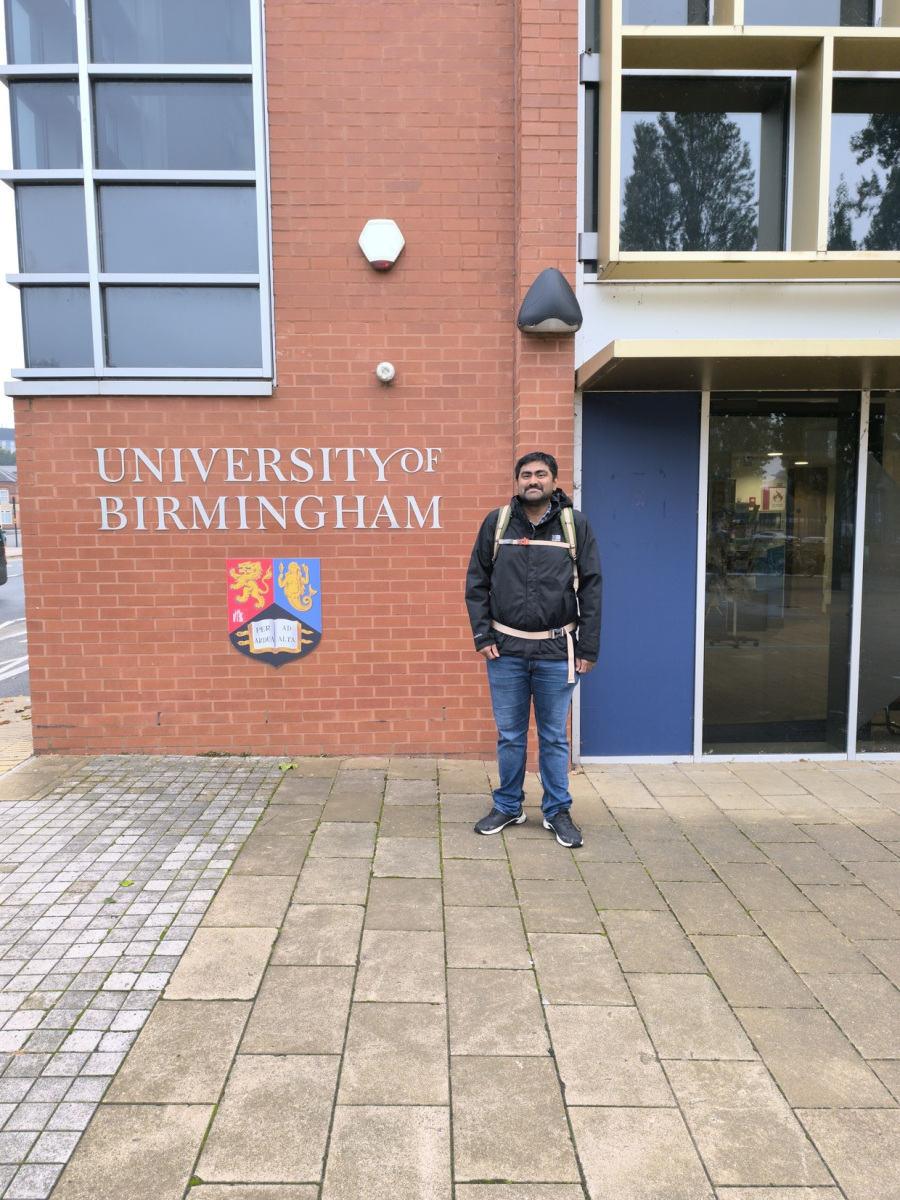

Abhishek Bamby Alphonse is one of the beneficiaries of the competition for funding student and PhD candidates mobility within the HarSval project. He received 12500 PLN funding for specialized course: PGR Catchment Science Summer School, which took place at University of Birmingham.
Enjoy reading his report below:
“Thanks to the HarSval funding, I was able to participate in the “PGR Catchment Science Summer School 2024” at the University of Birmingham. Co-hosted by the University of Birmingham and the University of Aberdeen, University of Zurich, TU Berlin and the Global Institute for Water Security, the course aimed to highlight the significance of small catchment science and its implications for large-scale hydrological processes.
At the summer school, I presented a poster titled “Estimating spatial variability of soil moisture of High Arctic catchments using high-resolution UAV images.” I had productive discussions with course instructors and fellow students about my research goals and progress. The classes primarily focused on modelling hillslope hydrological processes in catchments from New Zealand, Wales, and the USA.
The course gave a special attention to the Hydrologiska Byråns Vattenbalansavdelning (HBV) model, engaging in a hands-on session with the HBV light model. I applied the model to my research data and gained a solid understanding of its core principles. This experience allowed me to explore the concepts behind lumped and semi-distributed hydrological models.
Beyond the theory behind modelling, the course provided a detailed understanding of hydrochemical and isotopic measurements and analyses. It highlighted the link between field experiments and modelling approaches, enhancing my ability to integrate real-world data with theoretical models. Additionally, I gained insights into landscape analysis and how land use and climate change can impact streamflow, contributing to my understanding of the broader environmental and societal implications of hydrological changes.
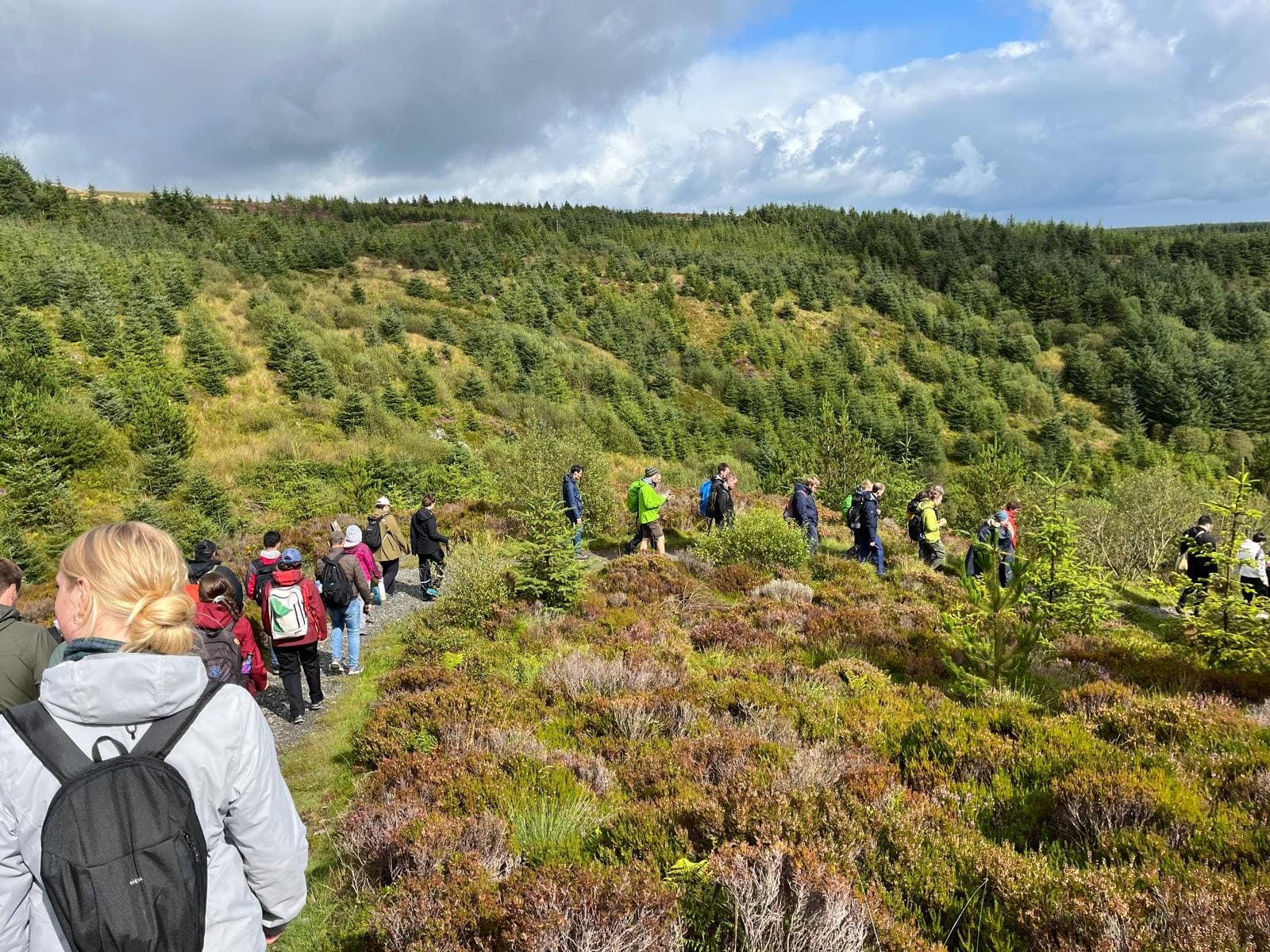
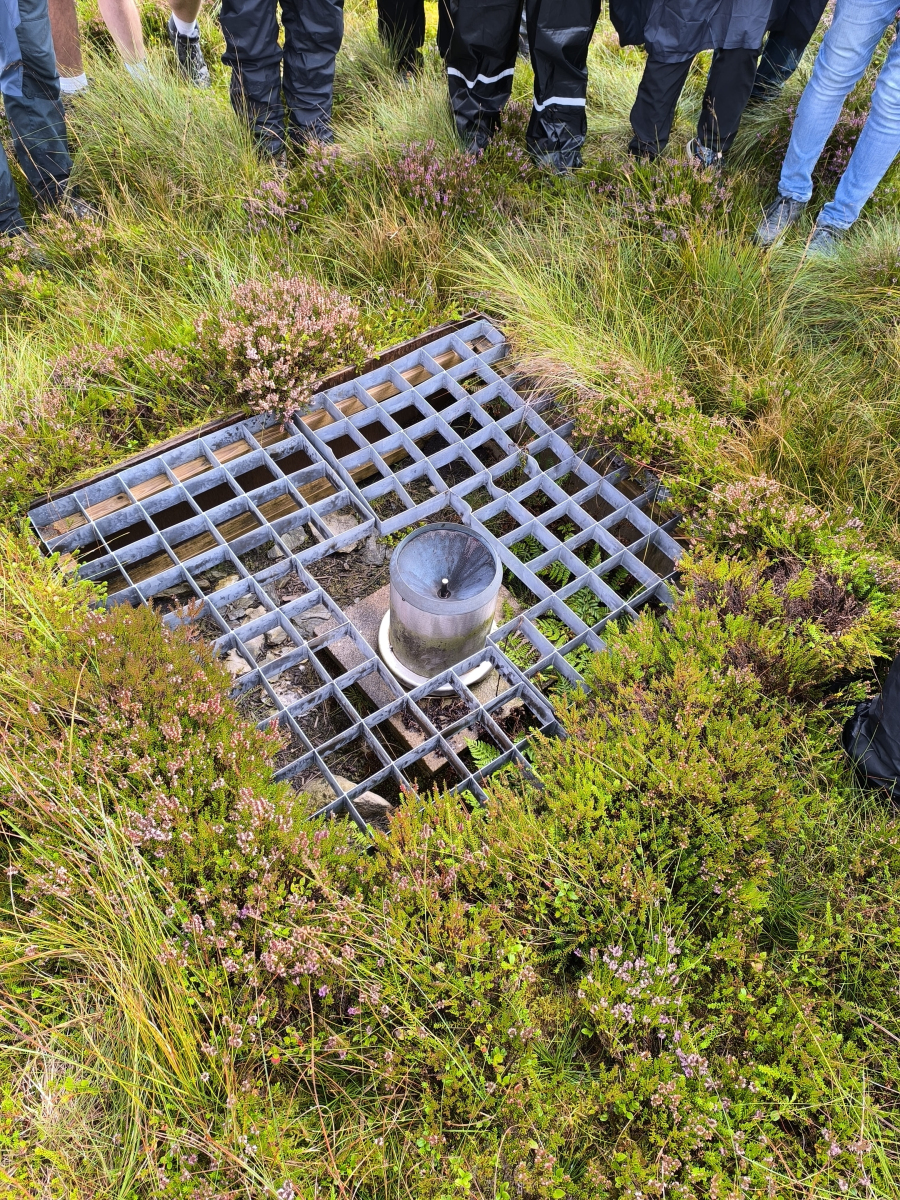
During a one-day field visit to the Plynlimon catchment in Wales, I had a chance to observe practical field measurements for an experimental mountain catchment. The site demonstrated the use of paired-catchment experiments to investigate hydrological behaviour under changing physical conditions, among other studies. I observed state-of-the-art instrumentation for collecting accurate and continuous time series data.”