
The Harsval project includes also strengthening the mobility of scientists between Polish and Norwegian entities. The outcome will be the integration of the Polish and Norwegian scientific communities, increased cohesion through increased competence and skills, and the creation of new international scientific initiatives based on Polish-Norwegian consortia to solve complex research challenges.
More information about the mobility programme you can found in WP2.
We received a report about the internship to UiT The Arctic University of Norway from Dr. Zuzanna Świrad (Institute of Geophysics Polish Academy of Sciences).
We invite you to enjoy:
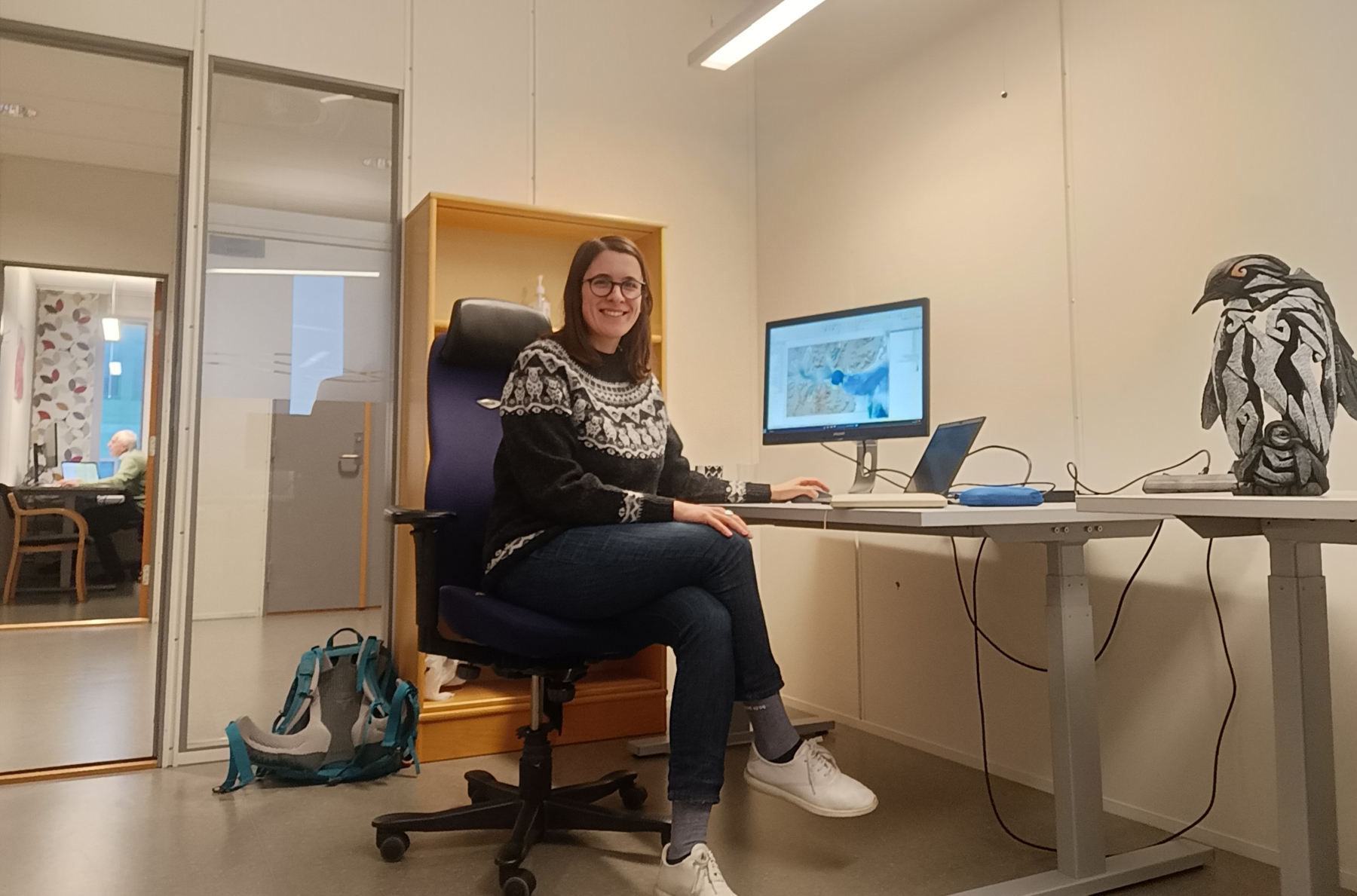
“Zuzanna Swirad (Institute of Geophysics, Polish Academy of Sciences) spent 2.5 weeks at UiT The Arctic University of Norway in Tromsø, where she worked with Prof. Malin Johansson on automatic classification of sea ice and glacial ice in Hornsund Fjord. Ice on the surface of fjords affects, among other things, the exchange of heat and light between the atmosphere and water, habitat conditions or the ability of ships to launch and move. Scientists use satellite SAR (synthetic aperture radar) images to create almost daily maps of the fjord ice coverage. Radar images have an advantage over optical images because they provide data during the polar night and on cloudy days. During this internship, Zuza focused on developing a method to automatically divide fjord ice into fast ice (attached to land), drift ice (moved by wind, waves or currents) and glacier ice (formed by calving glaciers that drain into the fjord).”